 UAE
UAE
Aeroponics: The Future of Sustainable Farming in India, New Zealand, and UAE


Frequently Asked Questions
Aeroponics is a soil-free farming method where plant roots are suspended in air and misted with a nutrient-rich solution. This technique improves oxygen exposure to roots, accelerates plant growth, and uses significantly less water compared to traditional farming.
In an aeroponic system, plants are held in a closed chamber while their roots remain exposed in air. A misting system sprays nutrients directly onto the roots at regular intervals, allowing plants to absorb water, nutrients, and oxygen more efficiently.
Hydroponics grows plants in nutrient-rich water, while aeroponics suspends roots in air and sprays them with nutrient mist. Aeroponics generally provides higher oxygen availability and can promote faster growth, but it requires more precise environmental control.
Aeroponics offers several advantages over conventional farming, including: 90–95% less water usage Faster plant growth Higher crop density Reduced pesticide use Year-round indoor cultivation However, it also requires controlled systems, electricity, and technical monitoring.
Aeroponics is gaining popularity in India because it helps address: Water scarcity Urban farming challenges Limited agricultural land Demand for pesticide-free food Cities like Pune, Mumbai, Bangalore, and Delhi are increasingly adopting indoor aeroponic farming systems.
The UAE faces challenges such as desert climate, water scarcity, and limited arable land. Aeroponics enables high-yield indoor farming using minimal water, making it an effective solution for improving food security and reducing dependency on imported produce.
Common aeroponic crops include: Lettuce Spinach Basil Mint Strawberries Tomatoes Microgreens Herbs These crops perform well because aeroponic systems provide precise nutrient delivery and oxygen-rich root environments.
Aeroponics can use up to 90–95% less water than traditional soil farming because nutrient mist is recirculated and delivered directly to plant roots with minimal wastage.
Yes. Indoor aeroponic systems are widely used in homes, greenhouses, laboratories, and vertical farms. Indoor setups typically use LED grow lights, climate control systems, and automated nutrient misting for year-round cultivation.
LED grow lights provide the specific light spectrum required for photosynthesis in indoor aeroponic farms. They are energy-efficient, produce less heat, and allow growers to optimize plant growth stages such as germination, vegetative growth, and flowering.
Benefits of LED grow lights include: Lower electricity consumption Long lifespan Customizable spectrum Reduced heat generation Better crop quality Faster growth cycles These advantages make LEDs ideal for indoor aeroponics and vertical farming.
Some common challenges include: High initial setup cost Dependence on electricity Technical maintenance Requirement for climate control Monitoring nutrient delivery systems Despite these challenges, aeroponics offers strong long-term sustainability benefits.
Aeroponics can be profitable in India for crops such as leafy greens, herbs, strawberries, and exotic vegetables. Profitability depends on factors such as crop selection, energy efficiency, market demand, and system automation.
Vertical aeroponic farming involves stacking plants in multiple vertical layers or towers while using aeroponic misting systems. This maximizes crop production in small spaces and is ideal for urban agriculture and indoor farming.
Aeroponic systems use water-soluble nutrient solutions containing: Nitrogen Phosphorus Potassium Calcium Magnesium Micronutrients These nutrients are delivered directly to plant roots through fine misting systems.
Yes. Indoor aeroponic systems operate in controlled environments that minimize exposure to soil-borne diseases and pests, reducing the need for pesticides and chemical treatments.
The future of aeroponics includes: AI-powered smart farming IoT monitoring systems Automated nutrient control Urban vertical farming Sustainable food production Aeroponics is expected to play a major role in future climate-resilient agriculture.
Related Articles
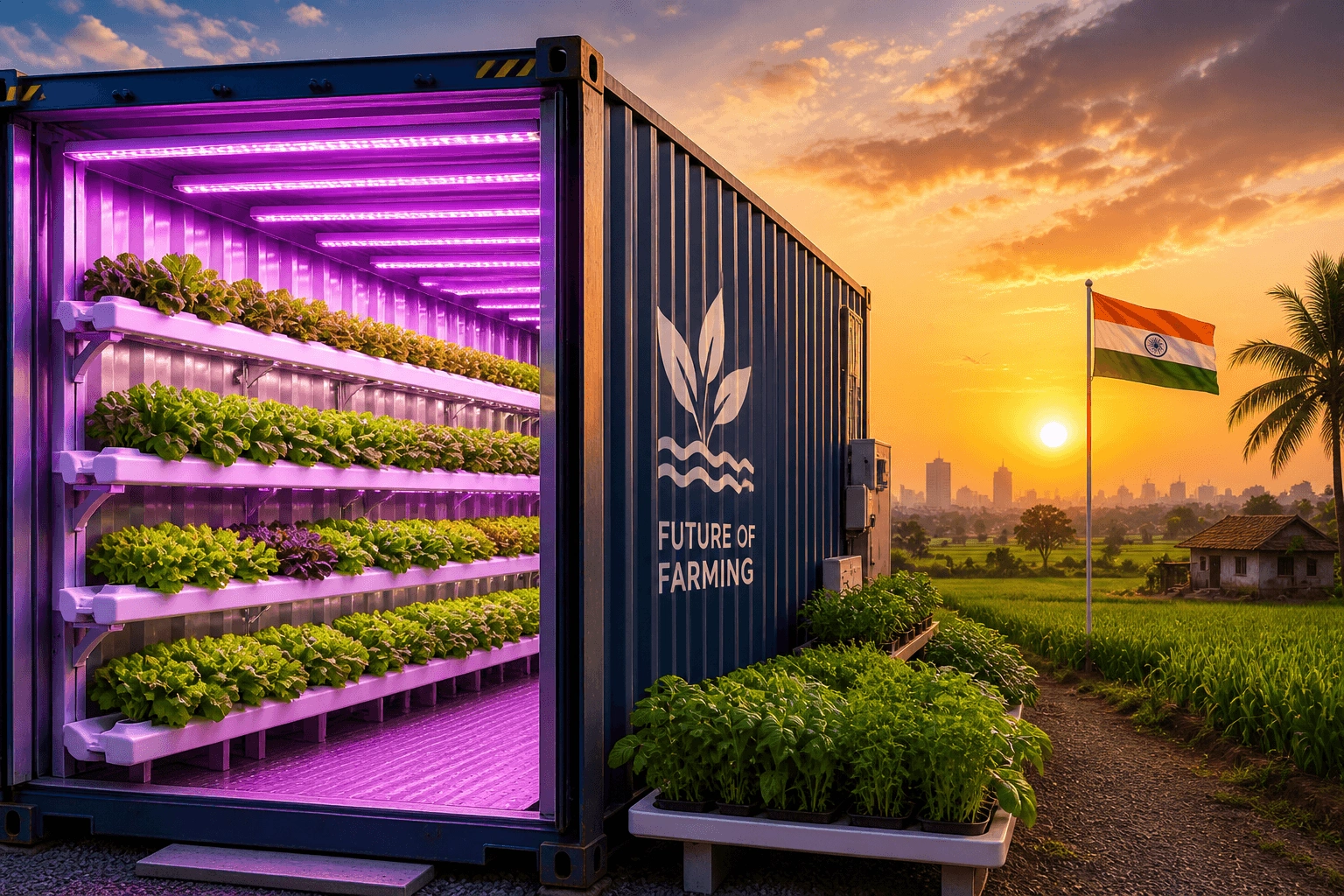
Container Farming in India: The Complete Guide to Setup, Crops & Profitability
Container Farming in India: The Complete Guide to Setup, Crops & Profitability

Artificial Light Sources: Illuminating the Path of Innovation
Artificial light sources have dramatically transformed human civilization. From the flicker of candle flames to the gleam of high-efficiency LEDs, artificial lighting has not only extended our productive hours beyond sunset but also revolutionized industries, urban landscapes, and personal lifestyle...

Labs Growing Plants from Tissue Cultures: The Role of Specialized Grow Lights
Labs Growing Plants from Tissue Cultures: The Role of Specialized Grow Lights Plant tissue culture has revolutionized agriculture, horticulture, and biotechnology by enabling the mass production of plants from a small piece of plant tissue. This technique provides numerous advantages, including dise...
Don't have an account?
Reset link sent!
Check your email for the password reset link.
Enter your email address and we'll send you a link to reset your password.
Already have an account?

Get Quote
Before You Go!
Get a free consultation from our lighting experts.