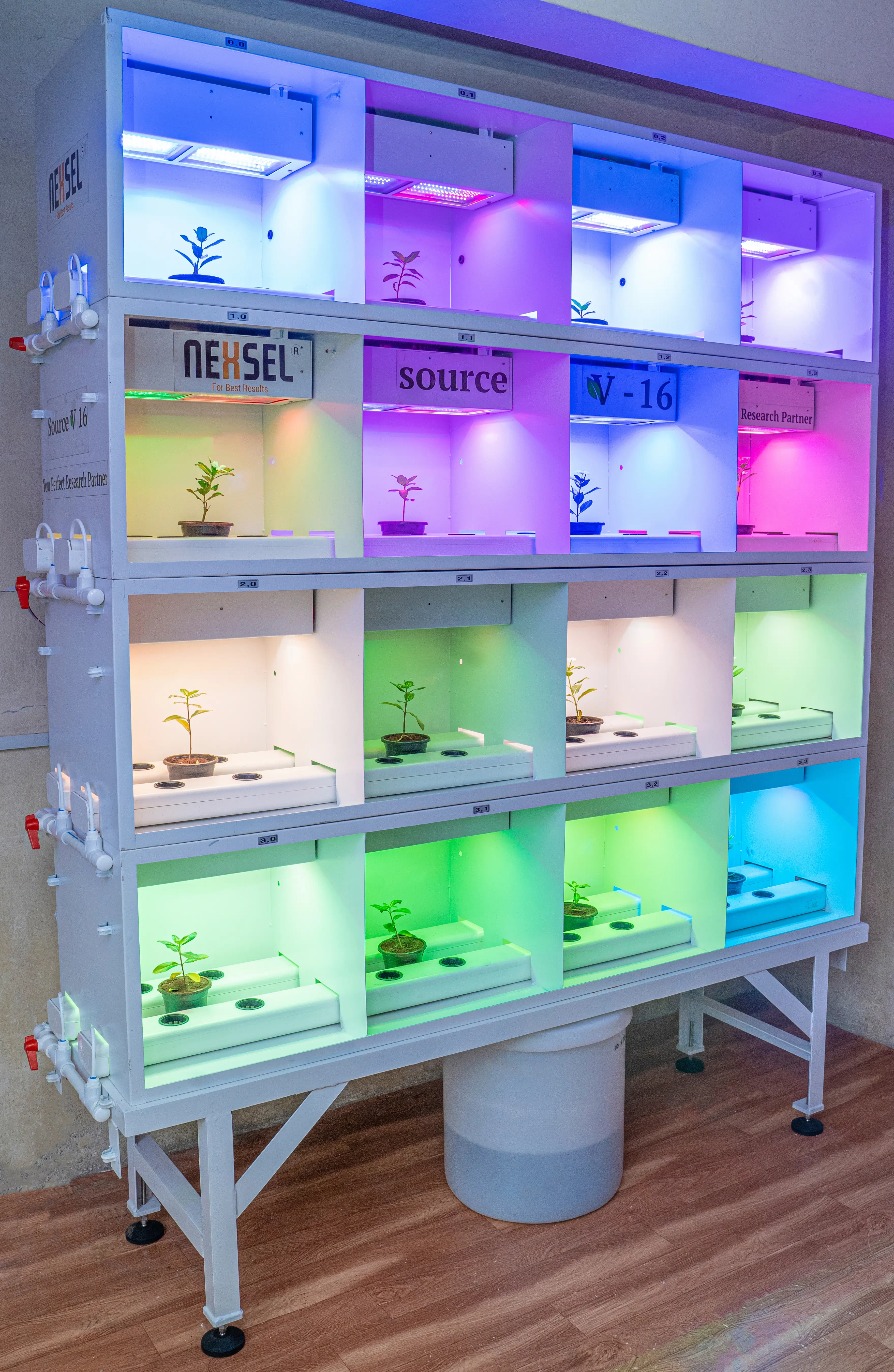
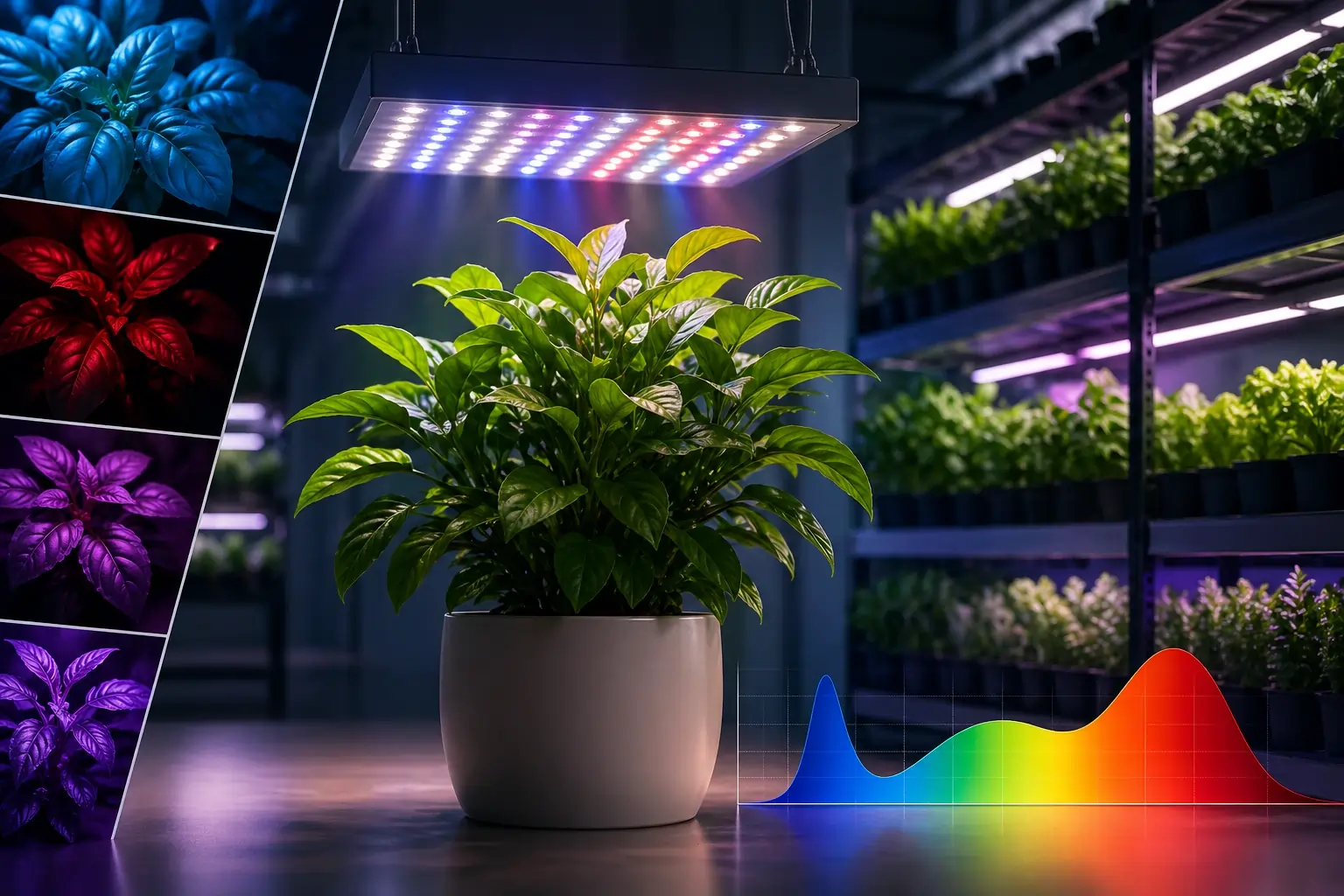
In the world of indoor cultivation, we often hear that “Light is Food.” If that’s true, then the beam angle is the spoon. You can have the most nutritious meal in the world, but if the spoon is too wide or the aim is off, half the nutrition ends up on the floor.
For vertical farms and commercial greenhouses, the physics of how light leaves the fixture—and where it lands—is just as important as the LED chip itself. Here is how to master the geometry of plant grow lights to ensure every photon counts.
1. The Inverse Relationship: Mounting Height vs. Beam Angle
The “gap” (the distance between your light source and the plant canopy) dictates your optical strategy. Light naturally spreads as it travels; the goal is to contain that spread within the leaf zone.
• High Mounting Heights: As the gap increases, you must narrow the beam angle. A narrow beam acts like a spotlight, punching the photons down to the canopy without letting them bleed out into the aisles.
• Close Canopy Lighting: In tight vertical racks where the light is only inches from the plants, a wider beam angle is superior. This ensures the light spreads quickly enough to cover the entire bed surface uniformly without creating “hot spots.”
2. The “Room Effect”: Rack Density and Light Spillage
Your choice of artificial lights should change based on your room’s layout. Photons don’t just disappear when they miss a plant; they hit walls and floors, turning into wasted heat and wasted money.
• Single or Double Rack Setups : If you are running only 1–2 racks in a room, you have no “safety net” for spilled light. In this scenario, smaller beam angles are mandatory. Any light that escapes the rack is a 100% loss.
• High-Density Multi-Rack Facilities : In a large-scale plant factory where racks are packed closely together, you can afford a wider beam angle. Why? Because the “spill” from one rack often lands on the neighbor rack. This “cross-lighting” can actually improve light uniformity across the entire facility, provided the racks are positioned to catch the overlap.
3. Directional Geometry: The 4×10 Rule
Even with the perfect chip and the perfect lens, installation direction can be the difference between profit and loss.
Consider a standard growing bed of 4 ft × 10 ft. To maximize Photon Utilization, lights should typically be installed parallel to the shorter (4 ft) side.
Why this matters:
• Uniformity: It ensures a more even “blanket” of light across the long axis.
• Waste Reduction: It minimizes the amount of light overshooting the edges of the 10 ft length.
• Shadow Reduction: It provides multiple angles of light entry into the canopy, reaching the lower leaves more effectively.
The Bottom Line: Geometry Equals Economy
In a plant factory, small technical decisions create a massive economic ripple effect. Choosing the right beam angle, mounting height, and installation direction results in Better Photon Utilization.
When you improve utilization, you get more growth per watt. In an industry where electricity can account for 60% of operating costs, mastering the beam angle isn’t just “good science”—it’s a business necessity.
Optimize your optics, and your plants (and balance sheet) will thank you.
₹317.00 – ₹546.00Price range: ₹317.00 through ₹546.00
₹465.00 – ₹810.00Price range: ₹465.00 through ₹810.00
Design & Developed By VBTEK
Get Quote
[el_shortcode id="25091"]
Leave A Comment