Architectural grow lights are specially designed plant lights used in commercial and premium interior spaces such as offices, hotels, malls, airports, hospitals, and public buildings.
These lights are not only for plant growth.
They are designed to support plants, protect human comfort, and match interior architecture.
In simple words, architectural grow lights work at the intersection of:
• Plant health
• Human comfort
• Architectural design
Why Architectural Grow Lights Are Important
Indoor plants usually do not get enough natural sunlight.
Without proper grow lights:
• Plants survive for a short time
• Leaves lose color
• Growth becomes weak
• Plants die within months
Architectural grow lights act as a life support system for indoor greenery and protect the investment made in plants and interiors.
Key Considerations for Architectural Grow Lights
1. Balance Between Plants and People
• Plants need light for photosynthesis
• People work, walk, and relax in the same space
Very high brightness causes:
• Glare
• Eye strain
• Headaches
So, light must be designed to support plants without disturbing people.
2. High CRI (Color Rendering Index)
• CRI should be 90 or above
• Low CRI makes plants look dull or grey
• High CRI shows natural green and red colors
High CRI improves:
• Visual quality of plants
• Overall interior appearance
3. Correct Light Spectrum
• Plants absorb mainly red and blue light
• Human eyes are sensitive to green light
Ideal architectural grow light:
• Red + Blue for plants
• Green for human comfort
Note:
• UV light is not required for indoor landscaping
4. Right Light Intensity (PPFD)
• Plant light intensity is measured in PPFD
• Different plants need different intensity:
• Foliage plants
• Flowering plants
• Decorative plants
Each plant has:
• Minimum intensity – plant survives
• Optimum intensity – plant grows healthy
Architectural projects always focus on optimum intensity, not maximum brightness.
5. Human Comfort (Lux Levels)
• Lux is the brightness felt by human eyes
Recommended comfort levels:
• 300–500 Lux → offices, lobbies, public areas
• Higher Lux → discomfort and glare
Plant lighting must stay within the human comfort zone.
6. Aesthetic Integration With Architecture
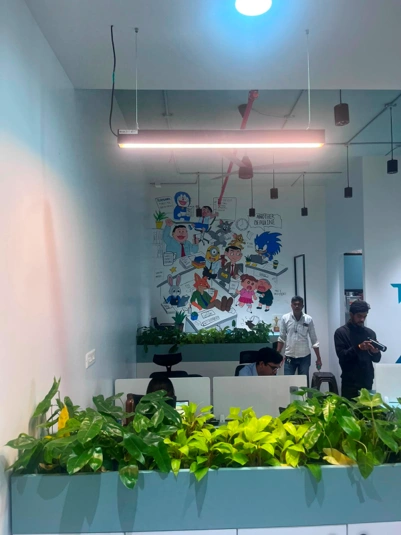
Lighting should look like part of the building, not an add-on.
Consider:
• Fixture shape and size
• Fixture color (RAL matching)
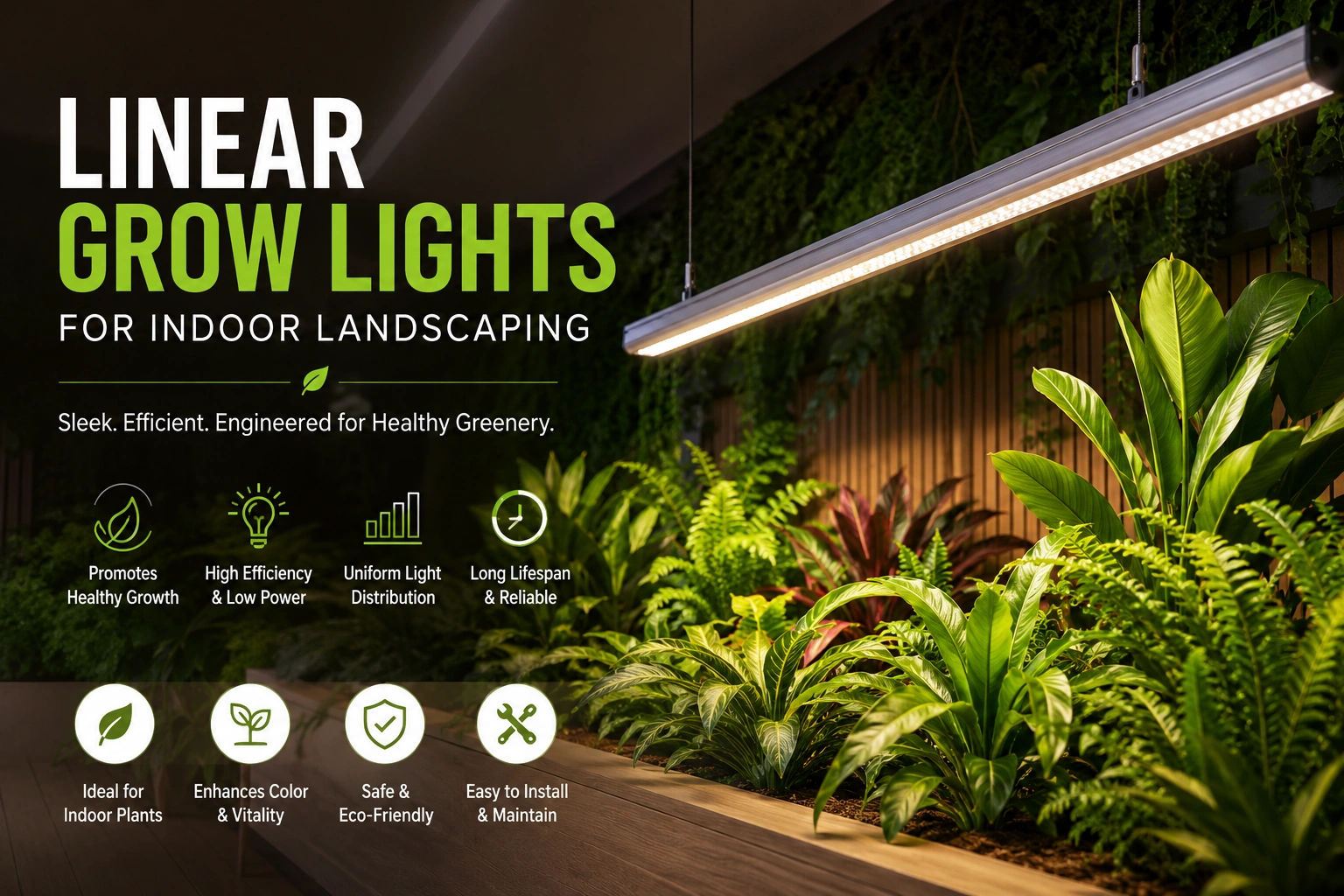
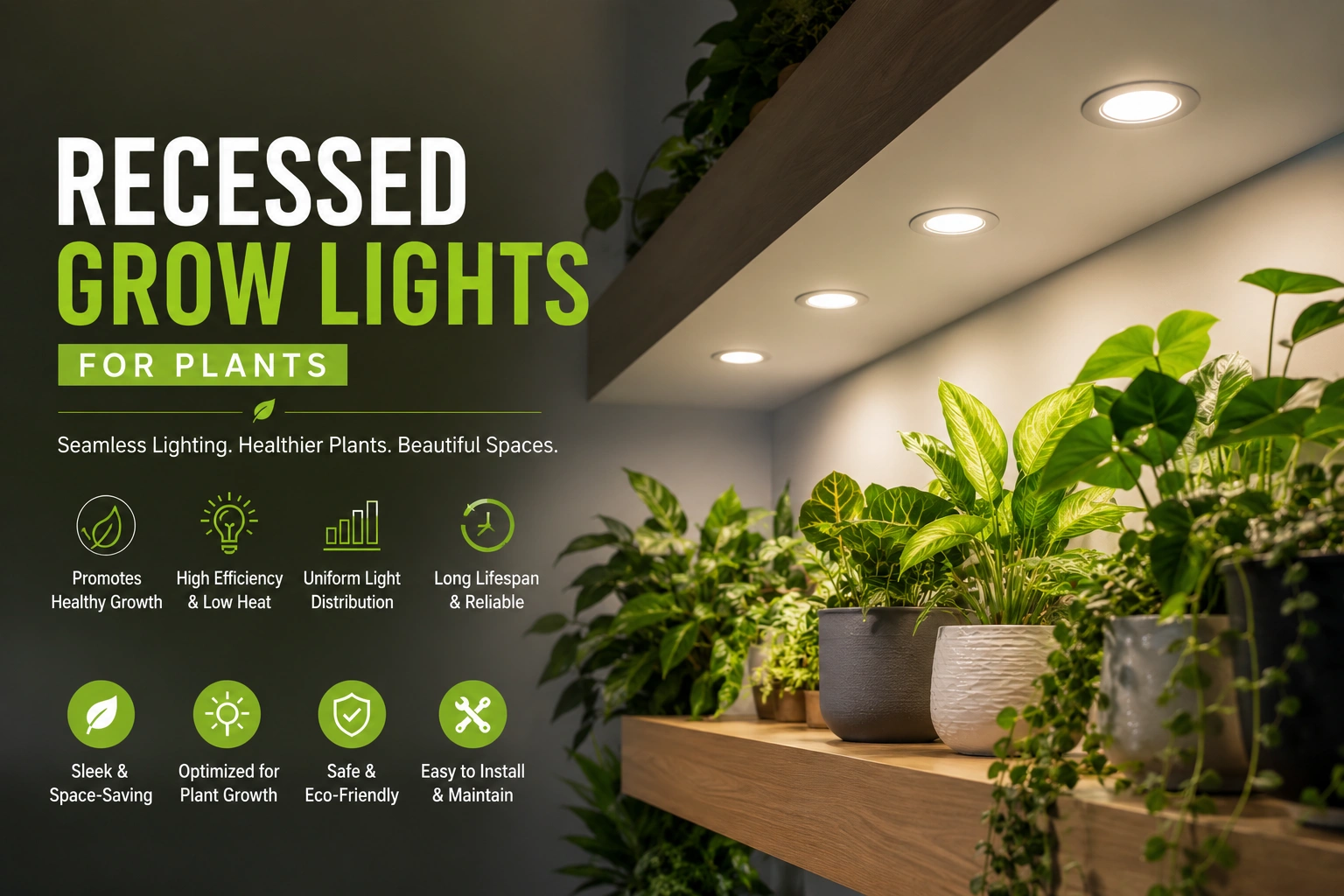
• Recessed or surface mounting
• Minimal visual obstruction
Good design keeps lighting invisible but effective.
7. Matching CCT With Interior Lighting
Common interior CCT options:
• 2700–3000K – Warm white
• 4500–5000K – Natural white
• 5700–6500K – Cool white
Architectural grow lights should:
• Match the interior CCT
• Still provide red and blue wavelengths for plants
A worked example on CCT. The warm end of the range is usually what integrates best with an interior lighting scheme. Our 70W non-dimmable grow light for balcony and ornamental plants runs the Nx4B spectrum at 3,225K with CRI 89 — close enough to typical warm-white architectural lighting that it reads as part of the scheme rather than as equipment, while still delivering a plant-usable spectrum weighted 42% red and 11% far-red. High CRI matters here for the same reason it does elsewhere in the specification: it keeps foliage and flower colour true.
• No bright spots (plant burn)
• No dark areas (plant death)
• Uniform lighting ensures:
• Even growth
• Long plant life
Healthy green walls and planters
9. Energy Efficiency and Reliability
• Energy-efficient LED grow lights reduce electricity cost
• Low heat output protects plants and interiors
• Long life reduces maintenance, especially in high ceilings
Best Practices for Successful Projects
For commercial and architectural projects, always follow these steps:
-
Involve the grow light supplier from the design stage
-
Finalize and share the plant list early
-
Do light simulation in both Lux and PPFD
-
Approve sample lights with architect and lighting consultant
-
Perform testing and commissioning on site
Conclusion
Architectural grow lights are not ordinary plant lights.
They are a designed system where plants, people, and architecture must work together.
When lighting is planned correctly:
• Plants remain healthy
• People feel comfortable
• Interiors look premium and long-lasting
 UAE
UAE