UAE
UAE

What is Morphogenesis in Plants? (How Light Spectrum and LED Grow Lights Control Plant Structure)
Introduction: Growth vs Structure
In modern indoor plant lighting design, the focus is usually on growth — biomass, yield, and speed.
But an equally important concept is morphogenesis in plants, which defines how a plant looks and develops its structure.
👉 Growth is about quantity.
👉 Morphogenesis is about structure and quality.
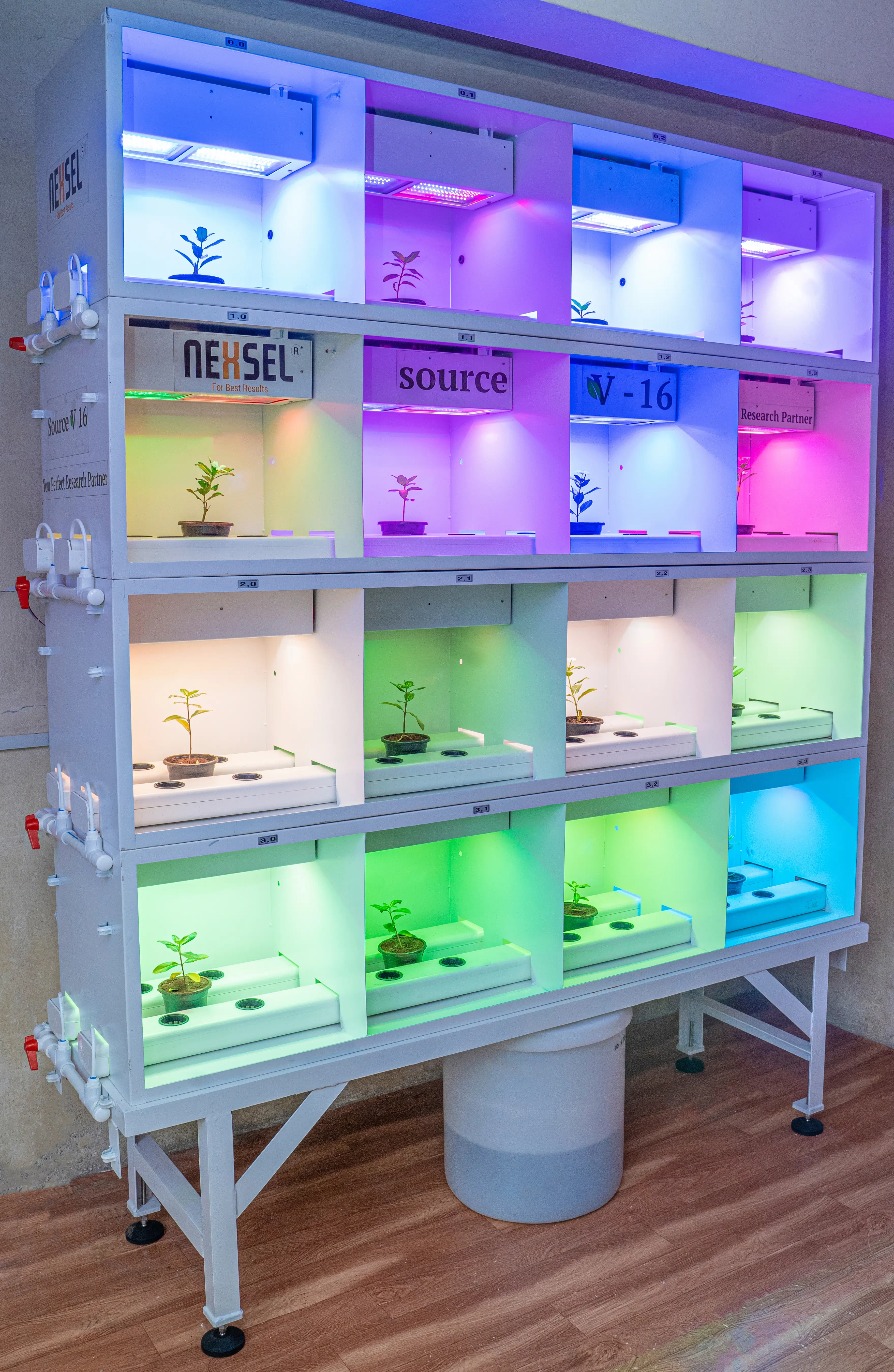
With the help of LED grow lights for indoor plants and the right light spectrum for plant growth, we can control:
Plant height
Stem thickness
Leaf size
Branching
Flowering timing
This is where plant morphology control with light becomes powerful.
What is Morphogenesis in Plants?
Morphogenesis in plants refers to how plants develop their physical form under different environmental signals, especially light.
In controlled environments, this is closely linked to Photomorphogenesis.
Unlike Photosynthesis, which focuses on energy and growth, morphogenesis focuses on plant architecture.
👉 Using LED grow lights and controlled spectrum, we can actively shape plant behavior and structure.
How Light Spectrum Affects Plant Morphology
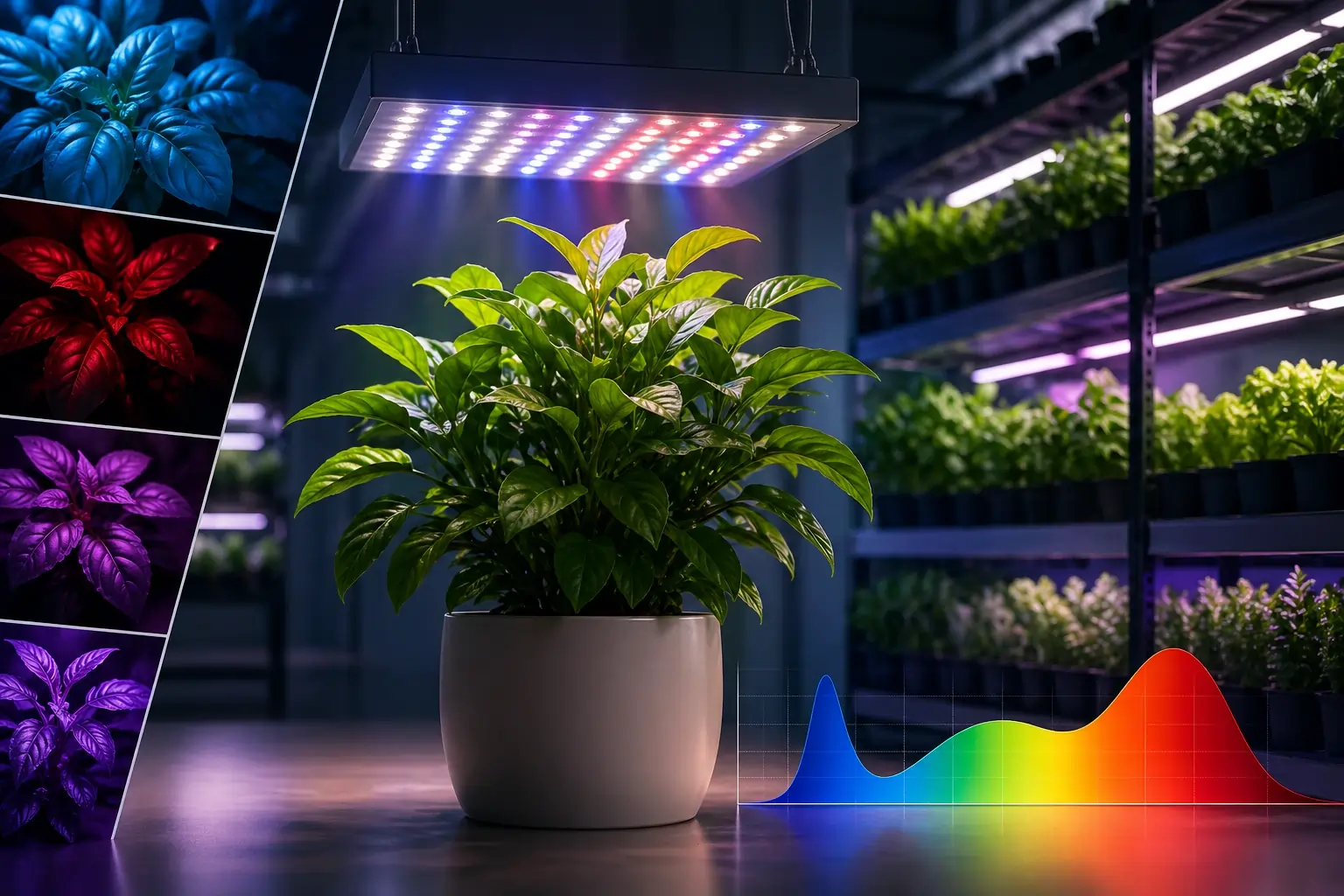
Different wavelengths in the light spectrum for plant growth trigger specific responses:
Blue Light (400–500 nm)
Controls compact growth
Prevents elongation
Strengthens leaves
Red Light (600–700 nm)
Drives photosynthesis
Supports flowering
Far-Red Light (700–800 nm)
Increases stem elongation
Controls plant height
UV-A Light (315–400 nm)
Improves color and plant quality
Enhances secondary compounds
👉 This shows how light affects plant structure is directly linked to spectrum design.
Common Light Recipes for Plant Morphology Control
Using grow light spectrum recipes, we can achieve specific results:
1. Compact Plant Growth (Prevent Leggy Plants)
High blue light (20–30%)
Best for indoor landscaping
Helps in how to prevent leggy plants indoors
2. Biomass Growth & Expansion
Balanced red + far-red
Increases canopy size
3. Color & Quality Enhancement
UV-A + blue light
Improves aesthetics and plant finish
4. Flowering Control Using Light
End-of-day far-red (EOD-FR)
Controls flowering timing
👉 These are widely used in controlled environment plant lighting systems.
Why Morphogenesis Matters in Indoor Landscaping
In indoor landscaping:
Space is limited
Aesthetics are critical
Maintenance should be low
👉 With proper indoor plant lighting design:
Plants remain compact and healthy
Less trimming is required
Visual appeal improves
Plant performance becomes consistent
Using LED grow lights for indoor plants, designers can achieve both function and design goals.
Practical Application: Controlling Flowering
One of the most advanced applications is how to control flowering using light spectrum.
Using Far-Red light recipes:
Flowering can be triggered or delayed
Crop cycles can be managed
Off-season production becomes possible
👉 This technique is based on plant light signaling and biological timing.
Key Takeaway
With the right light spectrum and LED grow lights:
We don't just grow plants
We control plant structure and behavior
This is the future of plant morphology control with light.
Final Thought
In today's controlled environment agriculture and indoor landscaping, success depends not only on growth —
👉 It depends on how well you control plant shape, quality, and timing.
Because better structure means:
Better aesthetics
Better quality
Better customer satisfaction