UAE
UAE

LED vs Fluorescent Lights in Tissue Culture: Save Cost & Increase Production
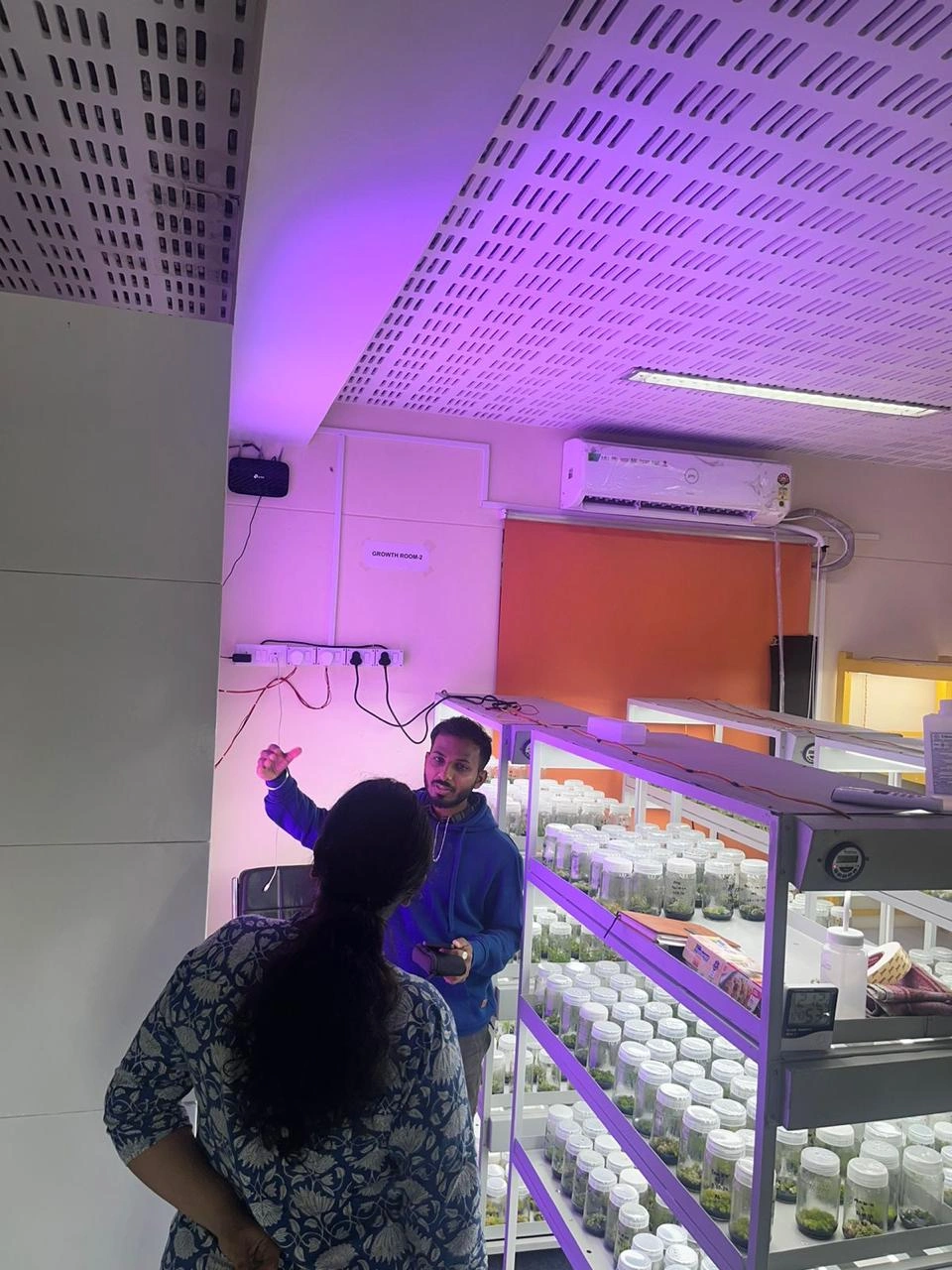
Tissue culture labs require efficient and reliable lighting for healthy plant growth. Traditionally, many labs use fluorescent (CFL) lights. However, LED grow lights are now becoming the preferred choice due to their higher efficiency and better performance.
In this article, we compare LED vs fluorescent lights in tissue culture and explain why switching to LED is a smart decision.
1. Up to 60% Energy Saving with LED Grow Lights 💡
One of the biggest advantages of LED lights in tissue culture is energy efficiency.
LED lights consume much less electricity than CFL lights
They provide the same light output with lower power
Labs can reduce lighting electricity consumption by up to 60%
Example:
Banana culture: 36W CFL → 19W LED
Gerbera culture: 36W CFL → 14W LED
👉 This leads to significant cost savings in electricity bills
Additionally, lower energy consumption helps reduce environmental impact 🌍
2. Reduce Air Conditioning Cost by up to 25% ❄️
Heat management is very important in tissue culture labs.
CFL lights produce more heat, increasing room temperature
This puts extra load on air conditioning systems
LED lights produce very little heat
👉 Result:
Up to 25% reduction in AC load
Lower cooling and maintenance cost
This also ensures stable temperature conditions, which is critical for plant growth 🌿
3. Increase Production Capacity by up to 15% 📈
LED lighting also helps improve space utilization in tissue culture racks.
CFL systems require more spacing between layers due to heat
LED systems allow reduced spacing
👉 Advantage:
You can add one extra layer per rack
Grow more plants in the same area
👉 Result:
Up to 15% increase in production capacity
Better use of infrastructure
Why LED is Better than Fluorescent in Tissue Culture ✅
Switching to LED grow lights offers multiple benefits:
💡 Up to 60% energy saving
❄️ Up to 25% reduction in cooling cost
📈 Up to 15% higher production
🌱 Better temperature control
💰 Lower overall operating cost
Conclusion 🚀
LED grow lights are a cost-effective and efficient solution for modern tissue culture labs. They not only reduce electricity and cooling costs but also improve production capacity.
👉 If you want higher efficiency, lower cost, and better plant growth, switching from fluorescent to LED lighting is the right step forward.
In the above article, we try to resolve the following customer queries:
Which is better for tissue culture labs—LED or fluorescent lights?
How much electricity can be saved by switching to LED grow lights?
Can LED lights reduce overall operating cost in tissue culture labs?
Why do fluorescent lights increase heat inside the lab?
How does lighting impact air conditioning cost?
Can LED lighting help reduce cooling load and maintenance cost?
How can lighting affect production capacity in tissue culture?
Is it possible to increase the number of layers in racks using LED lights?
How does LED lighting improve space utilization in labs?
What are the overall benefits of switching from CFL to LED in tissue culture?
Does LED lighting improve plant growth conditions compared to fluorescent?
Is switching to LED a financially viable decision for tissue culture labs?