UAE

22-Hour Photoperiod LED Lighting Protocols for Wheat, Barley and Chickpea
Abstract: Speed breeding represents an emerging crop improvement methodology that leverages controlled environment parameters—most notably extended photoperiods—to accelerate plant growth and shorten generation turnover times. Implementing a 22-hour LED light regime alongside a brief 2-hour dark period provides a practical framework for rapid generation advancement in wheat (Triticum aestivum L.), barley (Hordeum vulgare L.), and chickpea (Cicer arietinum L.). This article synthesizes current applications of extended daylengths and LED-based lighting protocols across these three major crops, giving specific attention to light intensity, thermal management, spectral quality, flowering behaviors, and seed yield. Existing literature shows that tailored long-day conditions effectively trigger earlier flowering and enable faster cycling, though responses remain heavily dependent on species, specific genotypes, and ambient growing parameters. Operational photosynthetic photon flux density (PPFD) levels typically range between 360 and 650 µmol m⁻² s⁻¹ across speed-breeding setups for wheat, barley, and chickpea. Furthermore, this review addresses key crop-specific factors, such as seed viability thresholding and early seed harvesting strategies for accelerating both legume and cereal generations. To provide a broader perspective, a natural-daylight rapid generation advancement protocol for wheat is evaluated as a complementary model, illustrating how seed-to-seed intervals can be compressed without complete dependence on artificial light source installations. Ultimately, the effective adoption of 22-hour LED lighting protocols relies on tight regulation of daylength, light uniformity, temperature, watering schedules, and crop-specific physiological traits. These techniques can significantly boost breeding program throughput and speed up the release of improved varieties, provided that protocols are carefully calibrated and verified for specific target genotypes and facility environments.
Introduction
Speed breeding accelerates generation turnover by manipulating environmental variables—most notably photoperiod, light intensity, thermoperiod, moisture, and nutrient availability. Rather than relying on natural seasonal cues, crops are cultivated under optimized, controlled environments to induce precocious flowering and seed set. Crucially, the objective extends beyond rapid vegetative growth; it centers on consistently securing viable seed while preserving the population's genetic utility for downstream selection (Shanmugavel et al., 2022; Watson et al., 2018).
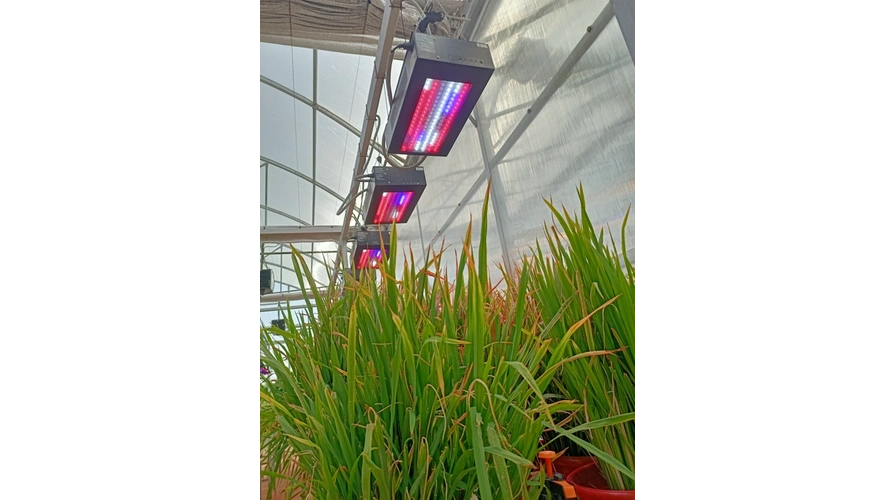
A 22-hour photoperiod entails exposing crops to 22 hours of continuous illumination paired with a brief 2-hour dark period daily. This extended-day regime forms the backbone of speed-breeding protocols in wheat and barley, and similar photoperiod extension techniques have markedly accelerated generation advancement in chickpea. Furthermore, the referenced speed-breeding literature documents effective photosynthetic photon flux densities (PPFD) between 360 and 650 µmol m⁻² s⁻¹ within the 400–700 nm photosynthetically active radiation (PAR) spectrum across species such as wheat, barley, and chickpea. Ultimately, these light intensities should be interpreted as a validated operational baseline rather than an absolute prescription for every unique genotype or luminaire configuration (Shanmugavel et al., 2022).
One important distinction: “22 hours” describes the daily photoperiod, not the LED power or brightness. The actual light reaching the canopy depends on fixture output, distance, shelf geometry, crop height and light distribution. A good protocol measures PPFD at plant level rather than relying only on the wattage printed on a lamp.
A practical starting protocol
The following is a starting framework assembled from the uploaded papers and published speed-breeding studies. It is not a guarantee that every genotype will flower or set seed on the same schedule. Begin with a small pilot, record the response of each genotype, and adjust only one or two variables at a time.
Wheat
Photoperiod: 22 h light / 2 h dark
Temperature starting point: About 22°C light / 17°C dark
Light intensity: Measure canopy PPFD; 360–650 µmol m⁻² s⁻¹ PAR is reported across these crops
Light source: LED fixtures delivering broad PAR (400–700 nm)
Seed advancement: Harvest mature seed, or test carefully timed early harvest where protocol and genotype support it
Barley
Photoperiod: 22 h light / 2 h dark
Temperature starting point: About 22°C light / 17°C dark
Light intensity: Same reported range; avoid assuming one value fits all cultivars
Light source: LED fixtures delivering broad PAR (400–700 nm)
Seed advancement: Early harvest of viable immature seed has been used in speed breeding
Chickpea
Photoperiod: Extended long day; 22 h is a reasonable pilot setting
Temperature starting point: Around 25 ± 1°C reported in speed-breeding summaries; validate by genotype
Light intensity: Same reported range; check heat and plant compactness as well as growth
Light source: LED fixtures delivering broad PAR; spectral changes should be tested rather than assumed
Seed advancement: Immature-seed germination can shorten the cycle, but timing is genotype-dependent
LED setup: make the light measurable
Photoperiod and timer
Set the timer for 22 hours ON and 2 hours OFF, keeping the schedule consistent each day. The dark interval matters: avoid accidental light leaks during the nominal dark period, and make sure the timer does not drift. If a cultivar shows abnormal leaf posture, bleaching, poor flowering or reduced seed set, compare it with a less extreme photoperiod in a small side-by-side test.
Light intensity and uniformity
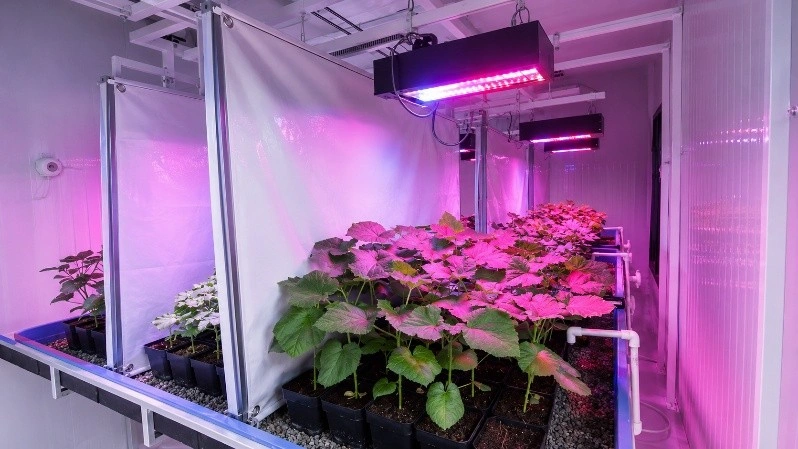
Use a quantum PAR sensor to measure PPFD at the top of the canopy, including the centre and corners of each shelf. Map the shelf after installing the lights, then repeat measurements as plants grow. Rotate trays or rearrange positions if the fixture creates strong hot spots. The 360–650 µmol m⁻² s⁻¹ range reported in the uploaded chapter is broad; a sensible pilot is to choose a moderate point within the range, monitor plant response and heat, and increase only if plants remain healthy and the canopy is receiving less light than intended.
Spectrum and heat
A broad-spectrum LED with useful output across PAR is a practical starting point. Red and blue wavelengths contribute to photosynthesis and plant development, while far-red can influence flowering and architecture in a genotype-dependent way. Do not assume that adding far-red will always speed flowering: Jähne et al. (2020) found that light-quality effects differed among short-day crops and genotypes. Check leaf temperature and air temperature under the fixture; a long photoperiod can increase daily light exposure even when the lamp itself appears cool.
Crop-by-crop notes
Wheat (Triticum aestivum L.)
[INSERT IMAGE HERE: wheat-speed-breeding.jpg]
Wheat serves as a primary model crop for long-day speed breeding. Applying a 22-hour photoperiod alongside controlled temperatures and carefully timed seed collection significantly shortens generation cycles. Watson et al. (2018) detail these speed-breeding protocols across wheat, barley, chickpea, and several
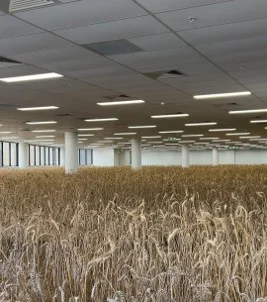
other crops within both growth chambers and glasshouses. Additionally, the literature highlights that harvesting immature seed early from plants grown under extended light regimes has proven effective in wheat and barley.
For a pilot study, it is essential to maintain meticulous cultivar tracking and generation labeling, sow uniform seed lots, and systematically track key developmental stages including emergence, tillering, heading, anthesis, and seed maturity. If you plan to implement early seed harvesting, test the window on a small cohort of plants first and verify germination rates before applying it across an entire breeding population. Early harvest functions strictly as a targeted technique to accelerate generations, not as a replacement for standard seed viability checks.
Work by Raj et al. (2025) offers a valuable alternative method rather than another 22-hour LED prescription. Their study standardized a rapid generation advance system for wheat under natural daylight during the Indian summer, evaluating two bread-wheat cultivars alongside planting density trials, post-anthesis irrigation withdrawal, and seed chilling treatments. They achieved a seed-to-seed cycle of 90–95 days, with cold stratification at 4°C for up to 72 hours raising germination rates above 90%. Since this protocol relied entirely on natural sunlight, its developmental timeline should not be conflated with outcomes from a 22-hour LED setup.
Barley (Hordeum vulgare L.)
Barley responds very well to extended photoperiods for rapid generation advance, and speed breeding has frequently been applied to generate material for disease-resistance studies. Shanmugavel et al. (2022) highlight barley research utilizing continuous illumination at a constant 22°C within a specific introgression-line experiment, whereas the broader wheat and barley speed-breeding framework relies on 22 hours of light alongside a brief dark interval. While these approaches are closely aligned, they are not identical configurations; precise lighting and temperature parameters ultimately depend on your specific experimental goals.
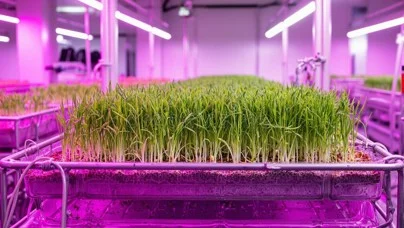
When working with barley, keep in mind that accelerated growth can narrow the timing window available for accurate phenotyping. Be sure to log heading and flowering times precisely, and keep your selection criteria aligned with the target trait. If evaluating disease resistance, it is critical to standardize both the environmental conditions and the scoring methods, as rapid generation cycles alone will not yield dependable disease-resistance rankings.
Chickpea (Cicer arietinum L.)
[INSERT IMAGE HERE: chickpea-plants-pods.jpg]
Chickpea benefits significantly from rapid generation protocols, though accessions often vary widely in their maturity rates and photoperiod sensitivity. Samineni et al. (2020) demonstrated a method that combined extended photoperiods to trigger earlier flowering with immature-seed germination to compress the overall cycle. Supplemental lighting reduced flowering times by 8–19 days in early-maturing lines, 7–16 days in medium-maturing lines, and 11–27 days in late-maturing accessions compared to control plants. Across their trials, they achieved up to seven generations per year in early material, 6.2 in medium material, and six in late material, though one late accession failed to advance beyond three cycles due to strong photoperiod and temperature constraints.
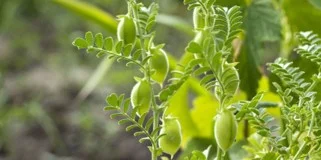
These findings highlight what is achievable under carefully controlled research conditions, rather than a universal guarantee for every chickpea line. Any 22-hour LED regimen needs to be validated on the specific accessions you are working with in the lab. Make sure to track flowering times and seed development for each genotype individually, and only adopt immature-seed harvesting once you have confirmed the earliest growth stage that consistently yields viable germination in your material.
Troubleshooting: when the plants do not respond as expected
Plants are tall or weak: Check PPFD distribution, spacing, nutrition and temperature. Do not assume a longer day alone solves insufficient light at the canopy.
Leaf bleaching or scorching: Reduce intensity or lamp proximity, verify leaf temperature and acclimate plants gradually.
Flowering is not accelerated: Genotype, vernalization requirement, temperature and light response may be limiting. Compare a small control group with a shorter photoperiod and confirm cultivar requirements.
Flowering occurs but seed set is poor: Review temperature, humidity, watering, nutrition and pollination biology; rapid flowering does not automatically mean viable seed.
Immature seeds fail to germinate: Harvest may be too early or the genotype may respond differently. Run a harvest-timing pilot and compare with fully mature seed.
Conclusion
The literature clearly supports long photoperiods as an effective strategy for accelerating generation turnover in wheat and barley, while combining extended light with immature-seed rescue techniques can significantly speed up chickpea breeding. However, there is no single LED recipe that works universally. The cited review outlines a relatively broad PAR intensity range, whereas the chickpea research underlines major genotypic variations, and the 2025 wheat study illustrates a distinct rapid generation advance route using natural daylight. Consequently, the summary table above should be viewed as a defensible starting framework for a controlled pilot trial rather than a fully validated standard operating procedure for every cultivar.
A practical approach to establishing your own protocol is to evaluate two or three PPFD levels alongside a comparative photoperiod on a small, representative set of genotypes, provided space permits. Maintain tight control over temperature, irrigation, and nutrient delivery throughout the trial. Ultimately, you should select the regime that yields repeatable flowering timelines, viable seed production, and dependable phenotyping—rather than simply chasing the earliest possible flowering date.
References
Jähne, F., Hahn, V., Würschum, T., & Leiser, W. L. (2020). Speed breeding short-day crops by LED-controlled light schemes. Theoretical and Applied Genetics, 133(8), 2335–2342. https://doi.org/10.1007/s00122-020-03601-4
Raj, N., Shukla, H., Bhurta, R., Bijarania, S., Kapoor, U., Chandra, A. K., Agarwal, P., Raghunandan, K., Mallick, N., Niranjana, M., Kumar, M. B. A., Sathee, L., & Jha, S. K. (2025). Rapid generation advancement protocol of wheat under natural day-length conditions during summer seasons in sub-tropical conditions. Indian Journal of Genetics and Plant Breeding, 85(1), 35–42. https://doi.org/10.31742/ISGPB.85.1.4
Samineni, S., Sen, M., Sajja, S. B., & Gaur, P. M. (2020). Rapid generation advance (RGA) in chickpea to produce up to seven generations per year and enable speed breeding. The Crop Journal, 8(1), 164–169. https://doi.org/10.1016/j.cj.2019.08.003
Shanmugavel, P., Ramasamy, G., Vellingiri, G., Marimuthu, R., & Thiyagarajan, K. (2022). Speed breeding: A propitious technique for accelerated crop improvement. In Case studies of breeding strategies in major plant species. IntechOpen. https://doi.org/10.5772/intechopen.105533
Watson, A., Ghosh, S., Williams, M. J., Cuddy, W. S., Simmonds, J., Rey, M.-D., Hatta, M. A. M., Hinchliffe, A., Steed, A., Reynolds, D., Adamski, N. M., Breakspear, A., Korolev, A., Rayner, T., Dixon, L. E., Riaz, A., Martin, W., Ryan, M., Edwards, D., Hickey, L. T. (2018). Speed breeding is a powerful tool to accelerate crop research and breeding. Nature Plants, 4(1), 23–29. https://doi.org/10.1038/s41477-017-0083-8