UAE
UAE

How Grow Lights and Controlled Environments Can Improve Plant Grafting Success
Plant grafting is widely used in commercial nurseries to improve plant quality and crop performance. However, one of the most critical stages of the process is graft healing.
Traditionally, graft healing is carried out inside a polyhouse. While this approach works, variations in temperature, humidity, light, and airflow can affect plant survival, quality, and consistency.
This is where controlled-environment graft healing becomes interesting.
Moving Graft Healing from a Polyhouse to a Controlled Environment
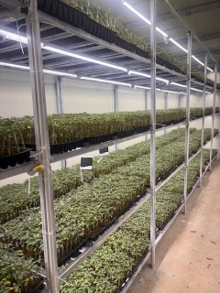
Last month, our team visited a commercial graft healing facility in Bastar, Jagdalpur, Chhattisgarh. The facility is operated by SKF, MKF, and RKF Nurseries and has recently started using a controlled environment for graft healing.
We have been exploring this concept for the last 3–4 years and working with agricultural universities, nurseries, and researchers to understand one important question:
What role does light play in successful graft healing?
During our visit, we discussed the initial results they were seeing compared to conventional polyhouse graft healing.
Their initial feedback was encouraging:
More than 25% reduction in plant mortality
Better plant quality and uniformity
For us, this was one of the most interesting learnings from the visit.
The Role of Grow Lights in Graft Healing 💡
From our experience across different grafting facilities, we have realised that light is an important part of successful graft healing—but it is only one part of the equation.
Using the right plant lights or grow lights for grafting can help provide consistent light intensity, spectrum, and photoperiod. However, light needs to work together with other environmental conditions.
For successful graft healing, important parameters include:
Temperature: Around 28°C during the day and 25°C at night
Relative Humidity: Around 90%
Light Intensity: Approximately 100 PPFD
Light Spectrum: Crop-specific spectrum, such as Nx4.1
Photoperiod: Around 14 hours
Airflow: Approximately 30 cm/sec
CO₂: Around 600 ppm, depending on crop and facility requirements
These parameters may vary depending on the crop, grafting method, and stage of plant development.
Why Controlled Environment Graft Healing Matters
A controlled environment allows nurseries to manage critical parameters more consistently compared to a conventional polyhouse.
Instead of depending completely on changing natural conditions, growers can control light, temperature, humidity, and airflow based on the requirements of the plants.
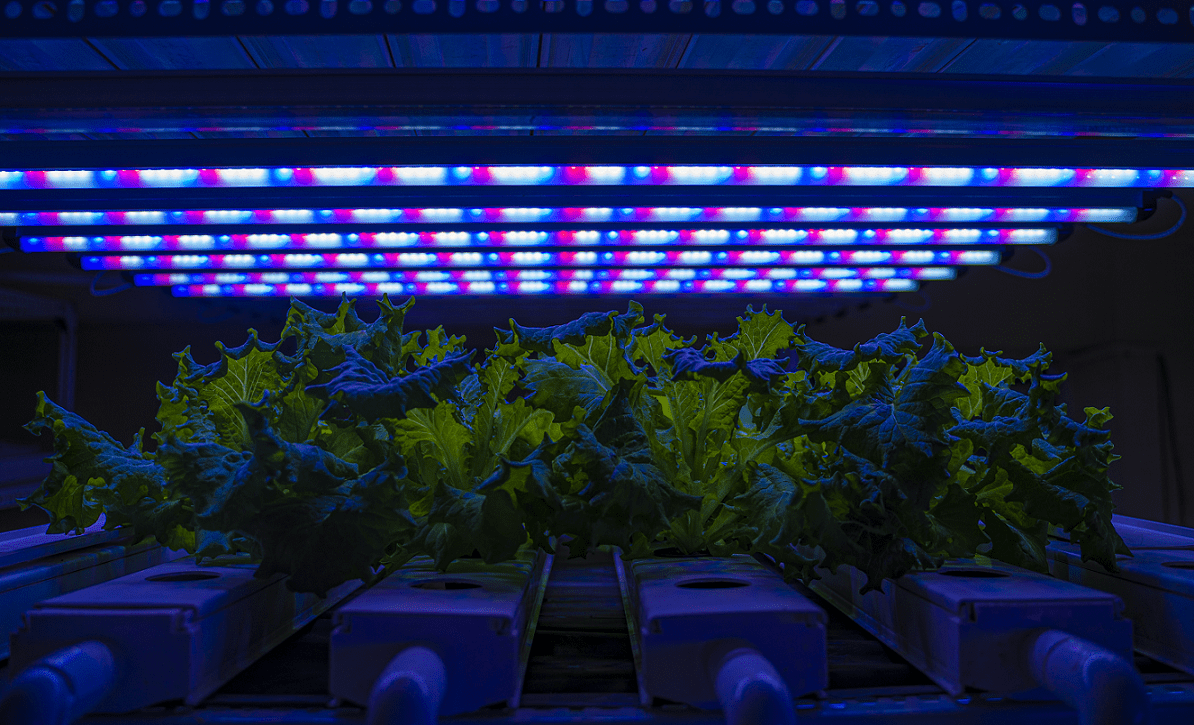
This is where LED grow lights for grafting can play an important role. Plant lighting helps create a controlled and consistent light environment, independent of changes in sunlight and weather conditions.
However, one of our key learnings is that controlled-environment agriculture is not simply about replacing sunlight with artificial light.
Successful plant growth and graft healing depend on how multiple parameters work together:
Light + Temperature + Humidity + Airflow + Plant Physiology 🌱
The Future of Grafting Lights and Controlled Nurseries
Every new graft healing facility gives us more data, more questions, and more opportunities to understand how plants respond when their environment is controlled.
The initial results from this facility—particularly the 25%+ reduction in mortality and improved plant quality—are encouraging. As the facility continues to operate, long-term observations and data will help us understand the complete impact of controlled-environment graft healing.
At Nexsel, we believe that the future of commercial nurseries will involve a better understanding of how plant lights, grow lights, and environmental control systems can work together to improve consistency and plant quality.
If you are working on plant grafting, graft healing, controlled-environment agriculture, or grow lights for grafting, we would be happy to exchange learnings and experiences. 🌱💡
In above article you will get answers of below questions
What are the ideal environmental conditions for successful graft healing?
Does light affect graft healing and graft survival?
What light intensity (PPFD) is required for graft healing?
What type of grow light is best for grafted plants?
What light spectrum is best for graft healing?
How many hours of light are required during graft healing?
Can LED grow lights replace sunlight for graft healing?
Can a controlled environment reduce mortality in grafted plants?
What causes graft failure and mortality after grafting?
How do you design a controlled-environment graft healing chamber?