 UAE
UAE
Ultimate Guide to Indoor Strawberry Lighting: Everything You Need to Know 🍓💡

Frequently Asked Questions
For indoor strawberry cultivation, Nexsel's NXB spectrum is one of the most suitable lighting solutions. This spectrum has been developed and validated through trials on multiple strawberry varieties. It has consistently delivered excellent results in terms of fruit quality (Brix value) and plant biomass (overall plant weight and growth). Based on our research and testing, the NXB spectrum is recommended for indoor strawberry production.
The ideal PPFD for indoor strawberry cultivation depends on the growth stage. During the seedling stage, a PPFD of approximately 200 µmol/m²/s is recommended. As the plants mature, the light intensity should be increased to 350–400 µmol/m²/s. Maintaining this range throughot flowering, and fruiting stages at plant canopy level generally supports healthy growth and good fruit production.
DLI = PPFD × Photoperiod For indoor strawberry cultivation, a DLI of 20–30 mol/m²/day is generally recommended, which can be achieved using the recommended PPFD and a photoperiod of approximately 14 hours per day
Indoor strawberry plants typically require 12–16 hours of light per day. A 14-hour photoperiod is commonly recommended to support healthy growth, flowering, and fruit productioN
Red light is one of the most important wavelengths for strawberry plants because it is efficiently absorbed by chlorophyll pigments for photosynthesis. It supports biomass development, leaf expansion, stem elongation, and flowering. However, red light should be balanced with other wavelengths to achieve optimal plant growth and fruit production.
Blue light is one of the key wavelengths absorbed by plants and plays an important role in vegetative growth. It promotes compact plant growth, healthy leaf development, and stronger plant structure. For best results, blue light should be balanced with other wavelengths in the spectrum.
Yes. Strawberries can be grown successfully indoors year-round using suitable LED grow lights along with controlled temperature, humidity, nutrients, and airflow.
The ideal daytime temperature for indoor strawberry cultivation is 18–22°C. While some varieties can tolerate temperatures up to 23-25°C, the optimal range for most strawberry varieties is 18–22°C.
Grow lights should be positioned so that the distance between the light and the fully grown strawberry canopy is approximately 15 cm (6 inches).
LED grow lights provide a plant-specific spectrum that supports photosynthesis, growth, and fruit production. Unlike traditional lighting designed for human vision, LED grow lights deliver the right balance of red, blue, and other essential wavelengths required for optimal strawberry growth.
Full-spectrum lighting provides a wide range of wavelengths (380–750 nm), allowing strawberry plants to utilize the light they need for different growth processes. It supports healthy growth, flowering, and fruit development.
Yes. Optimized lighting conditions can improve fruit size, sweetness, color development, and overall strawberry quality in indoor cultivation systems.
One of the most common mistakes is using low-efficiency grow lights. Since strawberries require relatively high light intensity, inefficient lights increase electricity consumption. Growers should choose high-efficiency grow lights that deliver the required PPFD with lower power consumption.
Growers commonly use PAR meters and quantum sensors to measure PPFD and evaluate lighting performance for indoor strawberry farming.
Yes. Vertical farming systems are widely used for indoor strawberry cultivation because they maximize space efficiency and support year-round production.
Uniform lighting ensures consistent growth, balanced flowering, and equal fruit development across all plants within the cultivation area.
Yes. Automated lighting systems with timers, dimming control, and smart monitoring can improve energy efficiency and crop consistency.
Excessive heat can stress plants, increase cooling requirements, and negatively affect flowering and fruit quality in indoor farms.
The future includes smart LED systems, spectrum-tunable lighting, automation, IoT-based monitoring, and energy-efficient indoor farming solutions for optimized strawberry production.
Related Articles
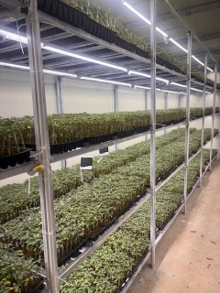
How Grow Lights and Controlled Environments Can Improve Plant Grafting Success
How Grow Lights and Controlled Environments Can Improve Plant Grafting Success

How to reduce electricity cost in vertical farm?
How to reduce electricity cost in vertical farm?
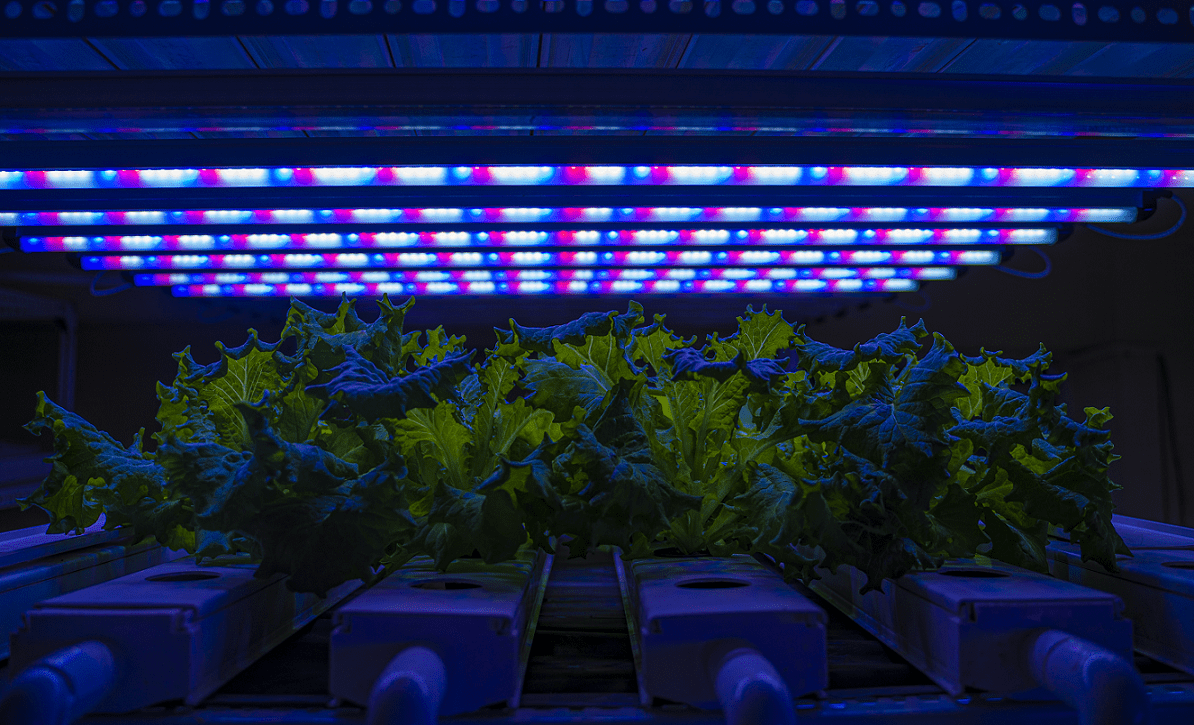
Optimizing Grow Lights for High-Quality Leafy Vegetables
Growing leafy vegetables indoors is not rocket science.However, making it profitable and sustainable is the real challenge. Over the last 10 years, we have seen many indoor farms shut down. At the same time, new agripreneurs continue to enter this space, aiming to build a viable and future-ready foo...
Don't have an account?
Reset link sent!
Check your email for the password reset link.
Enter your email address and we'll send you a link to reset your password.
Already have an account?

Get Quote
Before You Go!
Get a free consultation from our lighting experts.