UAE
UAE

LED Spectrum Flowering Regulation in Ornamental Plants: A Comprehensive Review
Introduction
Flowering is the most economically significant developmental event in ornamental plant production. The blooming stage of the ornamental plant cycle is the most important one for economic purposes, as it defines not only the aesthetic qualities of crops but also the timing of their release onto the market. The precise control of blooming makes it possible to ensure the optimization of all processes associated with crop production. (Trivellini et al., 2023; Siva Teja et al., 2026).
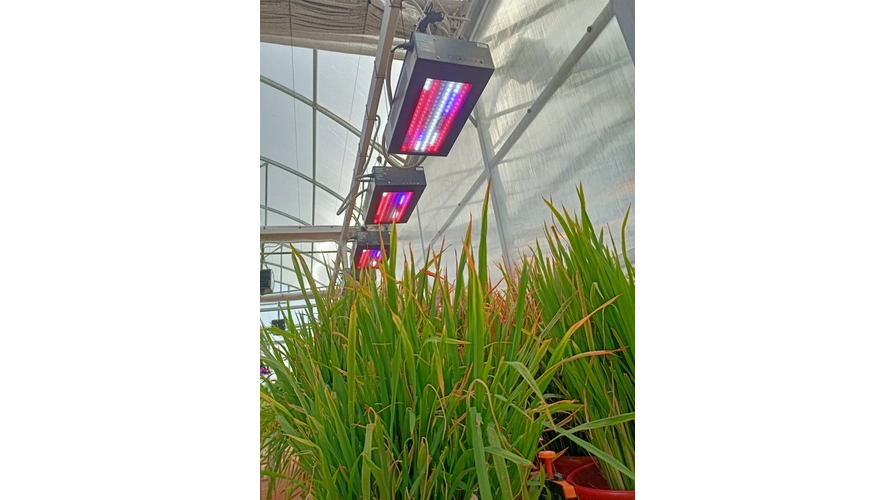
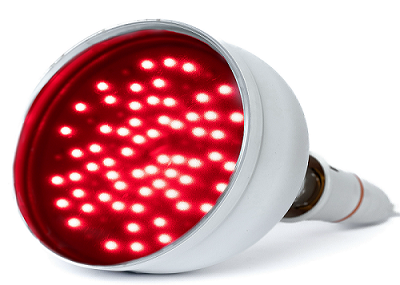
Flowering has traditionally been induced through photoperiod control by use of blackout curtains, lighting with incandescent or high-pressure sodium lamps, and use of plant growth regulators. Unfortunately, these traditional methods have several disadvantages, such as high energy demands, not optimal spectral composition of light, heating, and negative impact on environment from chemicals. Introduction of light emitting diode technology has revolutionized the field of horticulture lighting by bringing about precise control over light qualities and time in addition to high energy efficiency (Mitchell et al., 2015; Bantis et al., 2018).
By employing LEDs, the provision of certain wavelengths can be done so that specific photoreceptors are stimulated without the interference from other wavelengths. Spectral selectivity using LEDs has helped understand better how various wavelengths affect flowering and led to the creation of light recipes tailored for different plant species to enhance their flowering response (Meng & Runkle, 2014). The economic and ecological advantages of managing flowering through LEDs are numerous, including low power usage, the absence of growth regulators, homogeneity of crops, and better post-harvest quality (Trivellini et al., 2023; Siva Teja et al., 2026).
The current literature review gives an extensive overview of the physiology and molecular processes by which LED light spectrum manipulation controls the flowering process in ornamental plants. This literature review will address the role of photoreceptors in light sensing, the processes through which the photoperiodic responses are regulated, and the application of LED lighting schemes for various kinds of photoperiodic responses.
Discussion
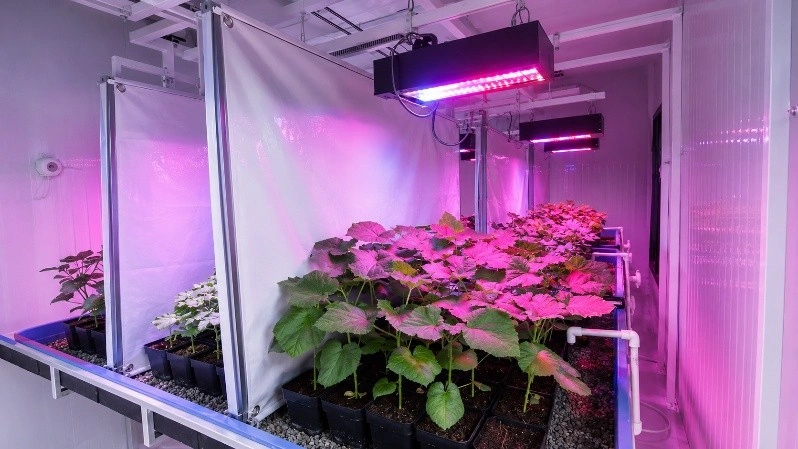
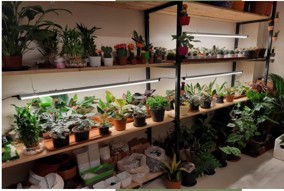
Based on the findings of recent studies, it can be concluded that the spectral composition of LED lighting has proven to be a critical factor in the control of flowering in CEAs. As opposed to being just a source of energy for photosynthesis, light acts as an environmental factor that influences photomorphogenesis and reproductive development via specific photoreceptors. This capability of LED lighting to modify the wavelength composition of light has been recognized as a valuable technique to promote efficient flowering response in ornamental plants and other photoperiodic plants (Trivellini et al., 2023; Teja et al., 2026).
The spectral region that plays the greatest role in flowering control is comprised of red (600–700 nm) and far-red (700–750 nm) wavelength. The modification of the red/far-red ratio leads to changes in the balance between active and inactive forms of phytochromes and thus affects the expression of flowering genes and vegetative to reproductive growth transition. In addition to that, blue light (400–500 nm) perceived via cryptochrome receptors promotes flowering and at the same time improves chlorophyll synthesis, stomata activity and plant structure. Consequently, flowering responses are generally more effective under combinations of red, blue, and far-red light than under monochromatic light treatments, as multiple photoreceptor pathways are activated simultaneously (Trivellini et al., 2023; Teja et al., 2026).
Meng and Runkle (2024) confirmed the significance of spectral manipulation in their work where warm-white and red plus far-red (R+FR) LED lighting was provided at various night time intervals for long-day ornamental plants. The outcome revealed that not only spectral quality but also timing affected flowering response. Lighting with red plus far-red lighting significantly advanced flowering of far-red sensitive long-day plants no matter whether it was provided after dusk, before dawn, or during night interruption. Moreover, flowering of some species was efficiently achieved with the help of warm-white LEDs and therefore, commercial white LED lights can serve as an economic option for photoperiodic lighting under specific growing conditions.
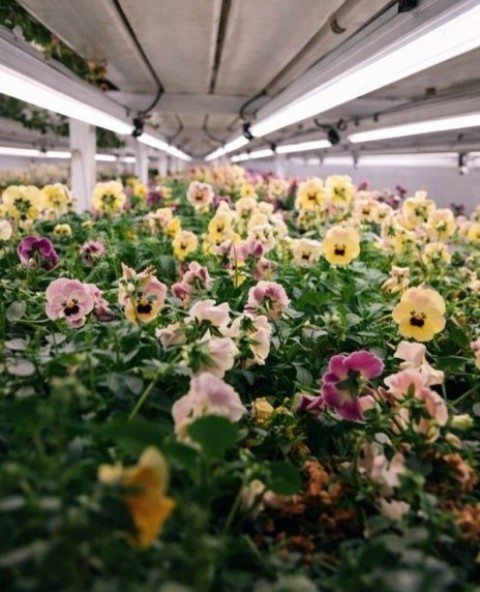
Review articles note that flowering regulation should not be considered the effect of spectral quality alone. Light intensity, photoperiod length, daily light integral (DLI), and temperature all interact with LED light spectrum in producing a flower response. Consequently, modern controlled-environment production increasingly relies on integrated lighting strategies that optimize spectrum, intensity, and photoperiod simultaneously rather than modifying a single lighting parameter (Trivellini et al., 2023; Teja et al., 2026).
Conclusion
Management of the LED light spectrum is a revolutionary technology in controlling flowering in ornamental plants production. Management of light quality, quantity and timings allows growers to control flowering via phytochromes and cryptochromes among others. This aspect of flower production technology will have far reaching consequences for production efficiency, quality of products and sustainability.
LED responses in ornamental plants depend on their species and photoperiodic response type. Typically, long-day plants show positive reactions towards the use of red far-red spectra, which form an intermediate state in the phytochrome photo stationary spectrum, and there is a cheaper alternative in the form of white LEDs for less sensitive species. For short-day plants, night-break treatments using red LEDs work well, whereas far-red lights neutralize this response. Day-neutral plants react more strongly to the quality of photosynthetic light.
The combination of LED lighting with various other environmental factors, such as temperature, light intensity, and CO2 levels, is important in order to obtain the best results during the flowering process. In future studies, it would be interesting to develop individual light recipes for different types of plants, study the interaction of light spectra with other environmental factors, and combine LED lighting with other cultivation practices. LED lighting for flowering provides a number of opportunities for sustainable floriculture.
References
Bantis, F., Smirnakou, S., Ouzounis, T., Koukouparas, A., Ntagkas, N., & Radoglou, K. (2018). Current status and recent achievements in the field of horticulture with the use of light-emitting diodes (LEDs). Scientia Horticulturae, 235, 437–451. https://doi.org/10.1016/j.scienta.2018.02.058
Mitache, M., Baidani, A., Bencharki, B., & Idrissi, O. (2024). Exploring the impact of light intensity under speed breeding conditions on the development and growth of lentil and chickpea. Plant Methods, 20, 30. https://doi.org/10.1186/s13007-024-01156-9
Meng, Q., & Runkle, E. S. (2024). Warm-white versus red plus far-red LED lamps at different nighttime timings regulate flowering of long-day plants. HortScience, 59(6), 767–775.
Trivellini, A., Toscano, S., Romano, D., & Ferrante, A. (2023). LED lighting to produce high-quality ornamental plants. Plants, 12(8), 1667. https://doi.org/10.3390/plants12081667
Teja, V. S., PS, L., T., S., Muradi, K. B., Sravya, N., Khatana, J. P., Totawar, H. M., Keshavrao, C. B., Babarao, D. S., & Wayal, Y. V. (2026). Role of LED lighting and light spectrum management in growth, flowering, and quality of ornamental plants. International Journal of Horticulture and Food Science, 8(1), 11–21. https://doi.org/10.33545/26631067.2026.v8.i2a.478